
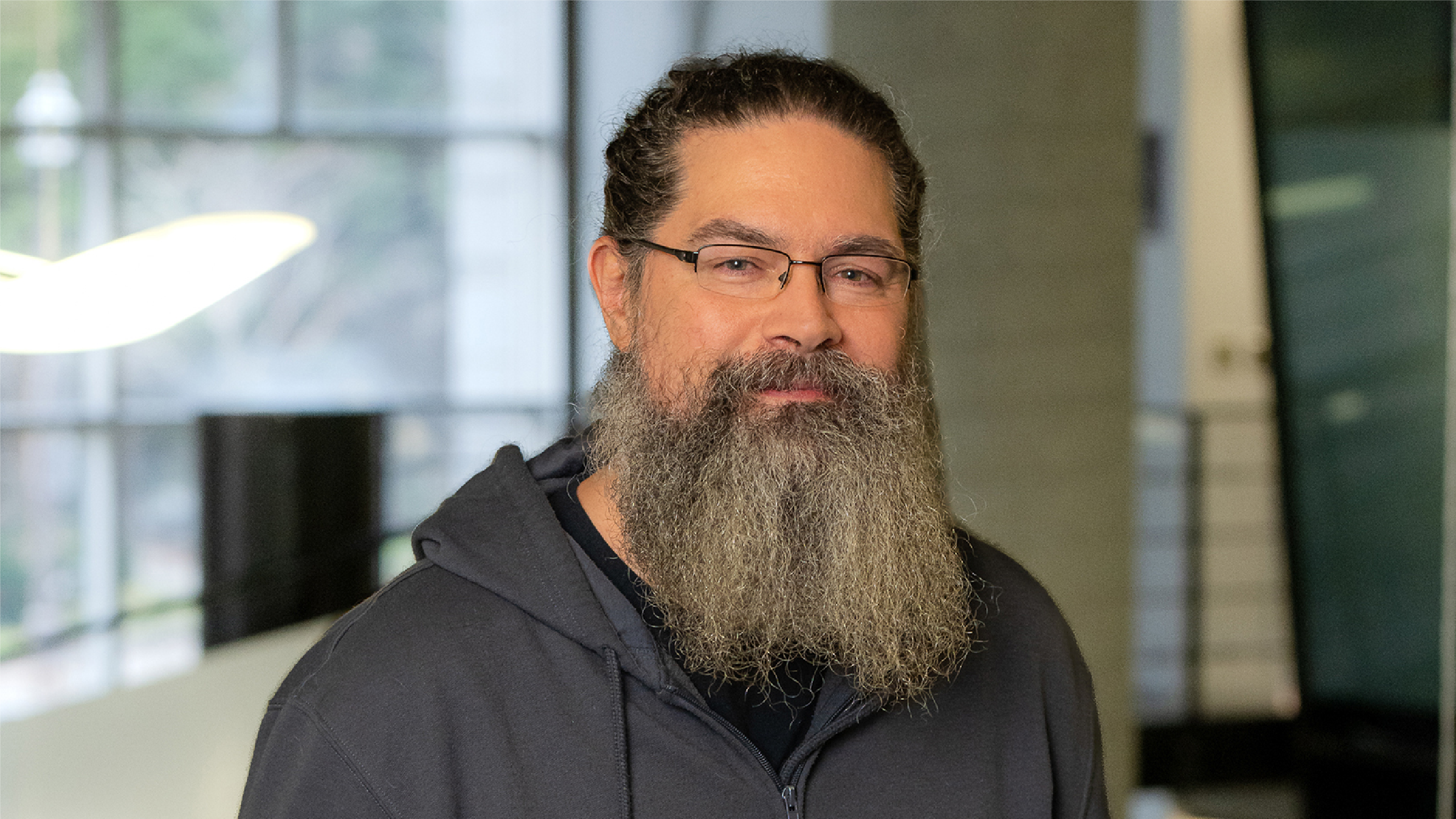
Inspiring Journey: Dominique Savard
Studio life
The inspiring journeys initiative aims to highlight members of our teams who stand out for their diverse backgrounds and unique experiences.
What is an inspiring journey at Frima?
It is a professional path that reflects both personal and professional growth. It can include career evolution, impactful involvement, alignment with the company’s values, and more.
From his beginnings as a tester to his current role as Studio QA Director, Dominique has explored many facets of game development, giving him a unique perspective that he leverages every day. Today, he shares his journey with us, the projects that left a mark on him, and what his day-to-day looks like at the studio.
1. Dominique, tell us about your journey at Frima.
I’ve had the opportunity to wear many hats at Frima over the years. I joined the studio in 2009 as a tester on the Quality Assurance (QA) team, at a time when we were mainly working on web games.
In my early days, I was also tasked with structuring the QA department. My role involved establishing a more organized approach: defining how to test a game, determining what needed to be covered, the actions to perform, the expected outcomes, and so on.
Later, I took on a lead role on a project, before moving into production as a project manager on a children’s MMO. I then returned to the QA team, before progressing into a production management role that allowed me to explore various aspects of development. Over time, my responsibilities gradually shifted back toward QA. That’s where my path eventually stabilized, as I became QA Director, a role fully dedicated to this specialty. Since 2021, I’ve held the position of Studio QA Director.
My journey, which bridges quality assurance and production, is now a valuable asset. Since QA works closely with production teams, this dual perspective allows me to better understand each side’s challenges.
2. What is the project you are most proud of so far, and why?
The first major project I contributed to was a children’s MMO. On the QA side, there were only two of us testers covering all the content. Needless to say, the workload was massive! I remember being at my station, with the other tester to my left, and all around us were the design and production teams. We were literally at the center of the team, in direct contact with every department.
This project was a turning point: people started to realize just how much QA could support them beyond simple functional testing. We were involved in many aspects, and a lot rested on our shoulders. It was a demanding experience, but an incredibly rewarding one.
3. Which of Frima’s values do you feel most strongly about?
Having fun at work is important to me. If I’m not having fun, I simply don’t feel like working. That said, fun doesn’t just happen on its own: it depends directly on collaboration, respect, and the quality of human relationships. When you work alone, when collaboration is limited, or when communication is difficult, enjoyment quickly fades.
Within my team, I make it a point to encourage teamwork. I try to maintain a relaxed, light-hearted atmosphere to reduce pressure, encourage initiative, and create an environment that supports open communication. I also work closely with the leads so they can carry this approach into their own teams.
Remote work can sometimes make this dynamic more challenging, which makes it all the more important to find ways to preserve that sense of human connection. I also try to help my team keep things in perspective in more challenging times. After all, we’re testing video games, we might as well do it in a healthy, engaging environment.
4. What advice would you give to someone starting out in the profession?
Previously, the QA role was seen as very repetitive. Today, it’s a whole different story. The job has evolved: we give our input and are actively involved in the projects.
Ensuring the quality of a game isn’t an isolated task. You need to reach out to other departments, communicate, ask questions. Everyone shares responsibility for the final quality of the product. As QA, our contribution today is much more qualitative, and to have a real impact, communication is essential. If you keep to yourself, your impact will inevitably be limited.
It’s also a role that requires initiative. You can’t wait for opportunities to come to you, you have to try, make mistakes, and learn. People don’t always enter QA with formal training or a clear path, but one thing is certain: we are the defenders of the player experience, and that goes far beyond simply finding bugs.
5. What is a typical day like in your role?
My role is to properly represent QA expertise to other departments. To do that, I need to stay on top of what’s happening both within the projects and across the industry, so I can better understand our current and future challenges.
I work closely with project teams to identify pain points, anticipate issues, and suggest areas for improvement. I also collaborate with the production leadership team to fully understand the studio’s priorities and explore how QA can evolve to better support overall goals.
I strongly believe in empowering teams. That’s why I’m less directly involved in the day-to-day of projects, in order to give leads the space they need. One of the parts of my role I enjoy the most is acting as a mentor, supporting the leads, guiding them toward solutions, while giving them the freedom to carve out their own path.
6. What is your favourite video game ever?
Day of the Tentacle: a brilliantly written game that I know by heart. I replay it at least once a year, just for fun. I’m also a big fan of Monster Hunter. And when I don’t really know what to play, I always go back to Satisfactory: it’s my comfort game, a sure bet.
At Frima, it’s the people who make all the difference. Whether it’s through their projects, their attitude, or their team spirit, employees are at the heart of everything we create. Want to learn more about our culture? Take a look at our careers page.